The dental implant
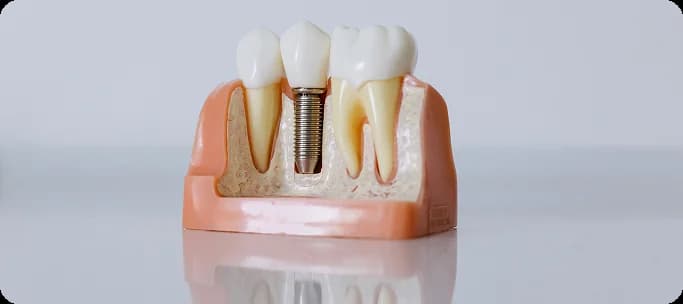
An artificial titanium root placed in the bone, holding a crown. It replaces one tooth without touching the neighbouring ones.
About implants →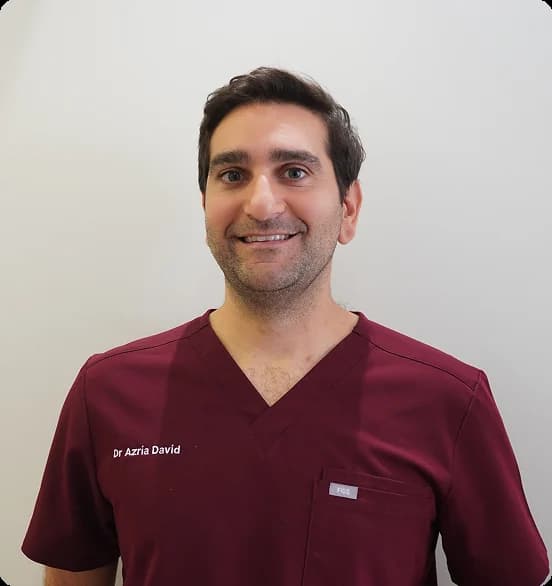
in implant surgery — Saint-Antoine and Pitié-Salpêtrière
At the practice, we replace one or several missing teeth with dental implants, with clear guidance and a treatment plan adapted to each situation.
Treatments
The right solution depends on how many teeth are missing and how much bone is available. It is decided together, after an examination and three-dimensional imaging.
An artificial titanium root placed in the bone, holding a crown. It replaces one tooth without touching the neighbouring ones.
About implants →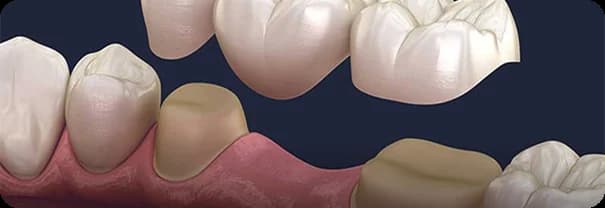
Several adjacent teeth replaced on two implants or more, rather than one implant per tooth.
About bridges →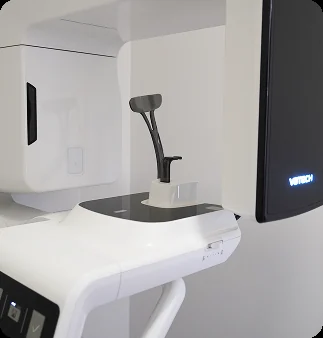
When the bone is not thick enough to hold an implant, it can be rebuilt beforehand. This is common, and it is planned for.
About bone grafts →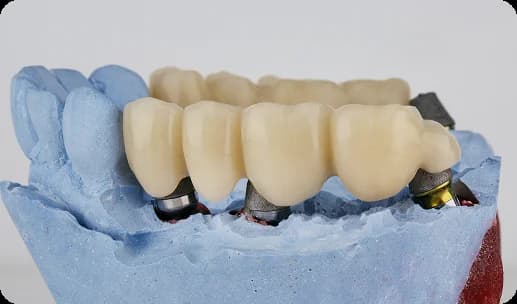
An entire arch restored on a reduced number of implants, for people with no remaining teeth or troubled by a removable denture.
About full-arch restoration →The method
Three-dimensional imaging measures bone volume and the position of nerves and sinuses before the procedure. A surgical guide then transfers the planned position, including angle and depth.
Nothing is discovered on the day of surgery: everything has been seen, measured and explained beforehand.
How it unfolds
The longest stage is also the quietest: healing, during which the bone bonds to the implant. It asks for nothing but time.
Examination, 3D imaging, bone analysis and a detailed written estimate.
A procedure under local anaesthetic, guided by the imaging.
The bone bonds to the implant. A temporary tooth may be fitted.
Impression, fabrication, then fitting of the final tooth.
Regular check-ups, as for your other teeth.
The practitioner
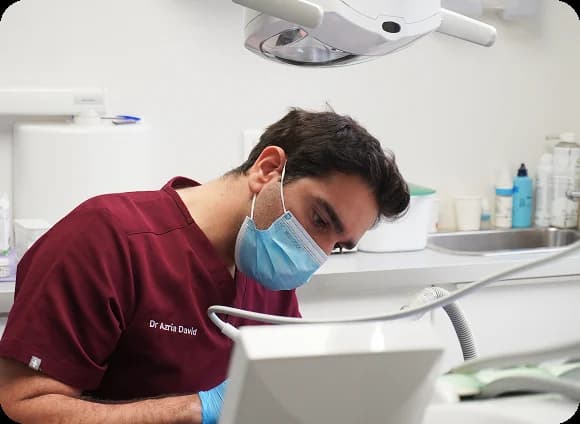
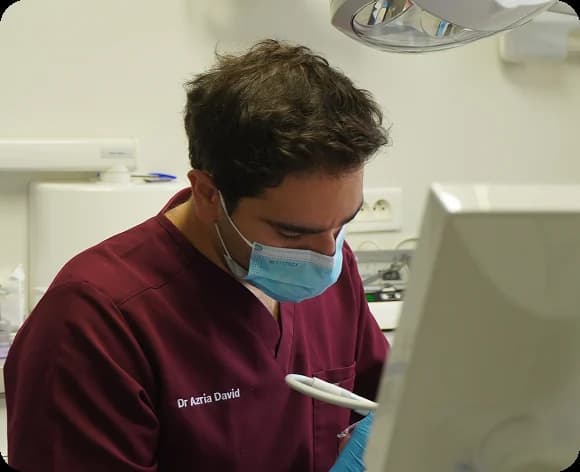
A dental surgeon, he devotes his practice to implant surgery and oral rehabilitation. He works at 65 rue d’Hautpoul, in the 19th arrondissement of Paris, and remains an attending practitioner in implant surgery at Saint-Antoine Hospital.
The practice
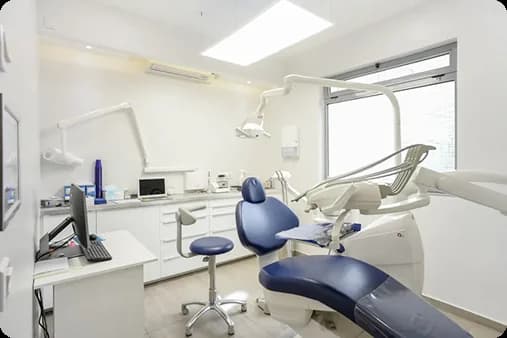
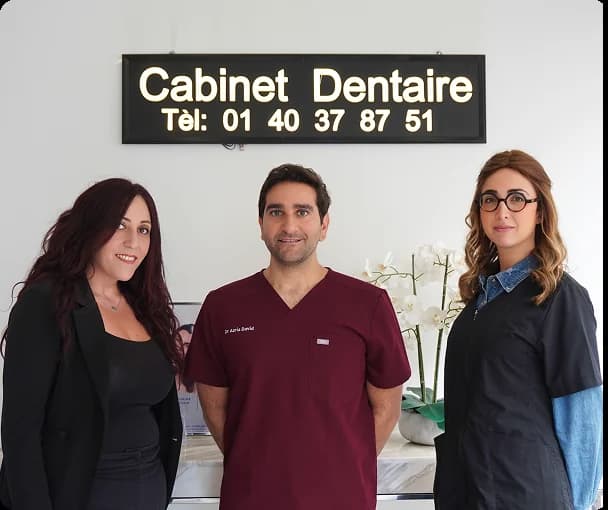
A neighbourhood practice, a short walk from place des Fêtes and Danube. Three-dimensional imaging and digital impressions are done on site.
The journal
Making a choice
Two ways of replacing a missing tooth, two different logics, and what the condition of the neighbouring teeth changes.
Read →Before the procedure
Bone graft, sinus lift: what these words cover, and why they often come before placement.
Read →After placement
Brushing, check-ups, what changes and what does not, compared with a natural tooth.
Read →Your questions
The procedure is carried out under local anaesthetic: it is not painful in itself. Moderate after-effects such as swelling or tenderness may appear in the following days; they are usually well controlled by the painkillers prescribed. Aftercare instructions are given to you on the day.
Placing a single implant usually takes between 30 and 60 minutes. The full treatment runs over several weeks to a few months, because the bone needs to bond to the implant before the final crown can be fitted.
The cost depends on the type of implant, on whether a bone graft is needed beforehand and on the type of crown. A personalised estimate is given to you after the assessment. The implant itself is not reimbursed by Assurance Maladie, the French state health insurance; the crown may be partly covered, and many complementary insurers, known here as mutuelles, offer a fixed allowance.
This is a common situation, and it has an answer: a bone graft or a sinus floor elevation rebuilds the volume needed before the implant is placed.
An implant is designed to last and can stay functional for many years. Its longevity depends on daily oral hygiene, on regular follow-up, on not smoking and on the health of the gums. The crown itself may need replacing over time.
Booking
An examination, imaging if needed, and a costed treatment plan you take away with you. With no obligation.
 or by phone