Implant surgery

Dental implant treatment in Paris.

At Dr David Azria’s practice in Paris, we replace one or several missing teeth with dental implants, with clear guidance and a treatment plan adapted to each situation.

Book an appointmentDoctolib
Training
Two postgraduate university diplomas in implant surgery, Saint-Antoine and Pitié-Salpêtrière
Hospital
Attending practitioner in implant surgery, Saint-Antoine Hospital
On site
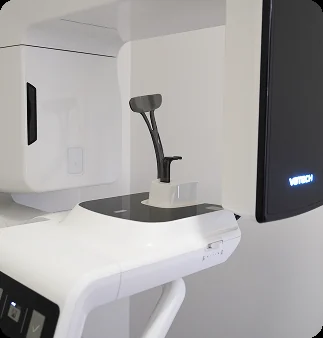
Three-dimensional imaging and digital impressions at the practice

What is a dental implant?

A dental implant is an artificial root, in titanium or ceramic, placed in the jawbone to replace a missing tooth. It supports a crown, a bridge or a full denture.

An implant has three parts: the implant itself, which is the root placed in the bone, the abutment that extends it, and the visible part, whether crown, bridge or denture.

Once placed, the implant gradually bonds to the bone through a process called osseointegration. It is that stability which then allows the prosthetic tooth to be fixed.

Unlike a removable appliance, an implant is fixed and rests directly on the bone, without drawing on the neighbouring teeth. It also helps limit the bone loss that naturally follows losing a tooth.

How is an implant placed?

It starts with a consultation, during which we assess the state of your mouth. We then carry out a three-dimensional scan, the DentoScan, which gives the exact dimensions of the area where the implant will go.

Then come the radiograph, the scan and the impression. Once these are done and the plan is settled, the implant is placed in the bone after a small incision in the gum, under local anaesthetic.

Implant surgery

The five stages of treatment

The longest stage is also the quietest: healing, during which the bone bonds to the implant. It asks for nothing but time.

1

Consultation and assessment

Clinical examination, 3D imaging, assessment of bone volume and gum health, then a treatment plan and a written estimate.

2

Placing the implant

The implant is inserted into the bone under local anaesthetic, with the help of guided surgery. Aftercare instructions are given to you.

3

Osseointegration

The implant bonds to the bone over several weeks to a few months. A temporary prosthesis may be planned for this phase.

4

Fitting the crown

Once the implant is stable, the abutment and the crown, bridge or denture are fitted and adjusted.

5

Follow-up

Regular check-ups and hygiene advice, to keep the implant sound over time.

What happens after placement?

Healing, or osseointegration, begins immediately after placement. Over roughly four to six months, the implant becomes firmly anchored in the bone and forms the base of the future prosthesis.

Once that stage is complete, the final prosthesis can be fitted. Regular check-ups then follow the implant over time.

Is this for me?

Implants are for people who have lost one or several teeth and who have enough bone, or bone that can be rebuilt. Some situations call for particular care.

Common indications

  • A missing tooth to replace without touching the neighbouring ones.
  • Several missing teeth, adjacent or not.
  • An edentulous jaw to restore with a fixed prosthesis on implants.
  • An unstable removable denture to stabilise.

Points to watch

  • Insufficient bone volume, in which case a graft may be considered.
  • Heavy smoking, which raises the risk of failure.
  • Uncontrolled diabetes or certain general conditions.
  • Certain medical treatments requiring specific advice.
  • Active gum disease, to be treated beforehand.

Only a clinical assessment and three-dimensional imaging can confirm whether an implant suits your situation. Some contraindications are temporary and can be lifted once treated.

On site

The equipment

Three pieces of equipment genuinely change how a placement is prepared, and all three are at the practice.

  • Three-dimensional imagingIt measures the bone available and locates the nerves and sinuses before the procedure.
  • Guided surgeryA guide transfers into the mouth the plan decided on the image, including angle and depth.
  • Digital impressionsThey replace impression paste for making the crown, and are taken on site.
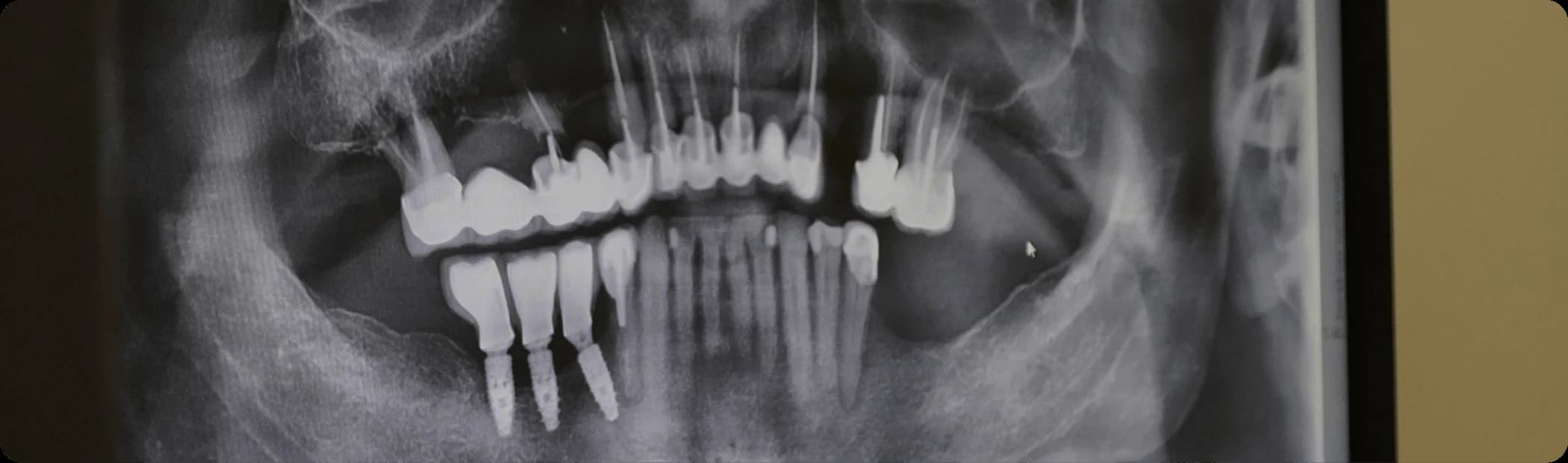
Panoramic radiograph showing implants in place in the bone

Implant surgery

Your questions

Am I a good candidate for an implant?

Implants are for people who have lost one or several teeth and who have enough bone, or bone that can be rebuilt. Only a clinical assessment and three-dimensional imaging can confirm it. Some contraindications are temporary and can be lifted once treated.

What does a dental implant cost?

The cost depends on several clinical factors and cannot be set in advance in general terms. It varies with the type of implant used, with whether a bone graft is needed beforehand, and with the type of crown chosen. A personalised, itemised estimate is given to you at the consultation, after the assessment and the imaging.

What is reimbursed?

The implant itself is not reimbursed by Assurance Maladie, the French state health insurance. The crown fitted on the implant may be partly covered depending on the case. Many complementary insurers, known here as mutuelles, offer a fixed allowance or a contribution towards implant treatment, the amount depending on your policy. We give you a compliant estimate to send to your insurer before any treatment.

Is it painful?

Placing an implant is done under local anaesthetic: the procedure itself is not painful. Moderate after-effects such as swelling or tenderness may appear in the following days; they are usually well controlled by the painkillers prescribed. Aftercare instructions are given to you to support healing.

How long does treatment take?

Placing a single implant usually takes between 30 and 60 minutes. The full treatment, however, runs over several weeks to a few months, because osseointegration has to happen between placing the implant and fitting the final crown. The overall duration depends on your clinical situation.

How long does an implant last?

A dental implant is designed to last and can stay functional for many years. Its longevity depends on oral hygiene, on regular follow-up with the dental surgeon, on not smoking and on the health of the gums. The crown itself may need replacing over time.

What are the risks?

Like any surgical procedure, placing an implant carries limited risks: infection, failure of osseointegration, or inflammation around the implant, known as peri-implantitis. Some situations call for care: heavy smoking, uncontrolled diabetes, certain conditions or treatments, insufficient bone. A prior assessment allows contraindications to be weighed and the plan adapted.

Is a bone graft always needed?

No. A graft is proposed only when the bone available is not enough to hold the implant steady. The need is determined by the clinical examination and by three-dimensional imaging. When it is needed, it is carried out before or during placement, depending on the situation.

Implant or bridge: what is the difference?

An implant replaces the root of the missing tooth and sits in the bone, without touching the neighbouring teeth. A traditional bridge rests on the adjacent teeth, which have to be reduced to support it. An implant therefore preserves healthy neighbouring teeth and helps maintain the jawbone. The choice between the two depends on your clinical situation.

Can all the teeth in a jaw be replaced?

Yes. A full prosthesis can be fixed on implants. The protocols known as All-on-4 and All-on-6 rest on four or six implants respectively, supporting a fixed prosthesis. This applies to people who have lost all their teeth or are close to it; the indication is confirmed after a full assessment.

Booking

Let us take the time to look at your situation.

An examination, imaging if needed, and a costed treatment plan you take away with you. With no obligation.

  • Address65 rue d’Hautpoul, 75019 Paris
  • Phone01 40 37 87 51
  • AppointmentsOnline on Doctolib or by phone
  • Opening hoursMonday to Thursday: 9 am – 1 pm and 2 pm – 7 pm
    Friday: 9 am – 3 pm
A treatment room at the practice
CallBookDoctolib